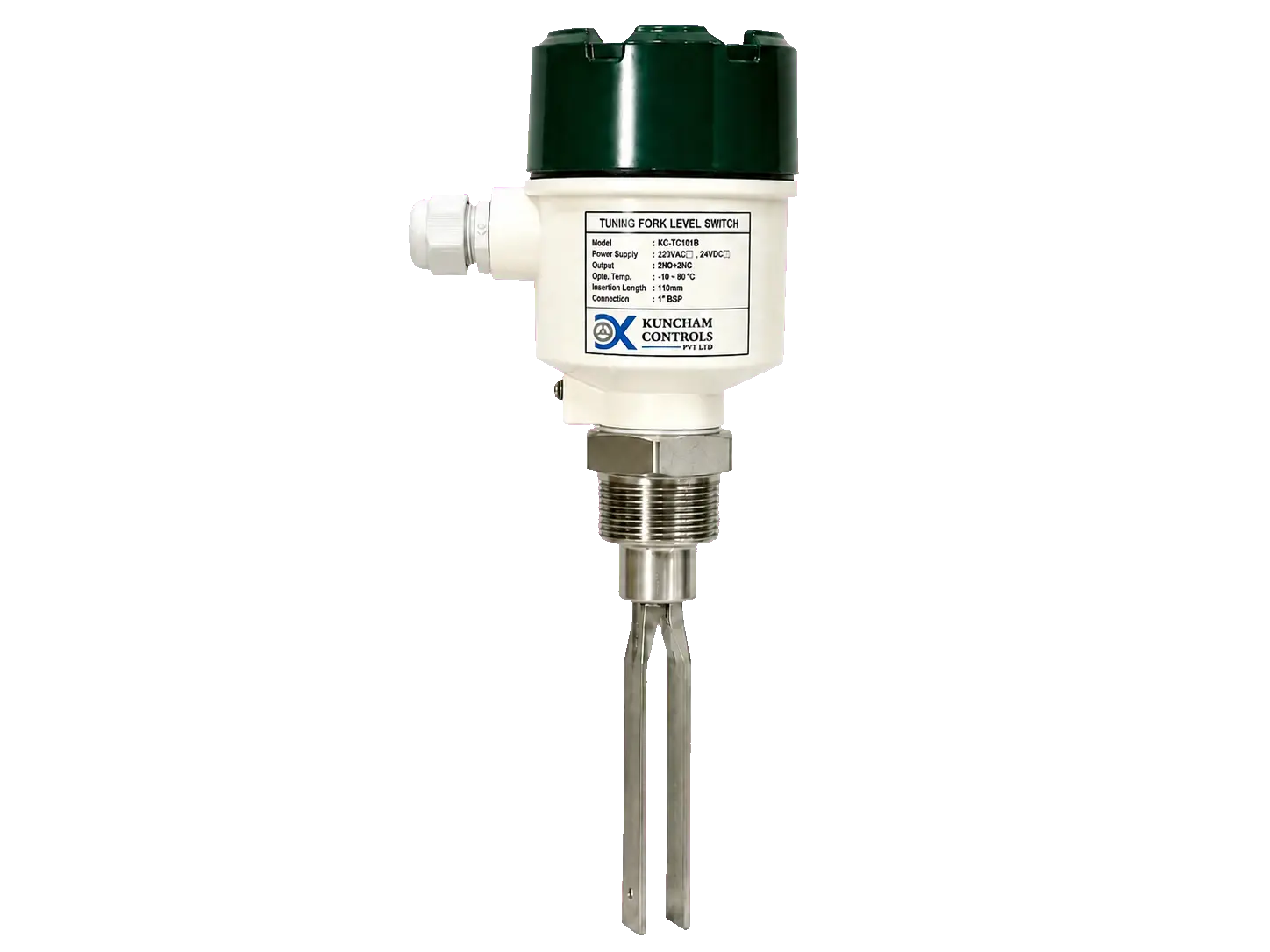
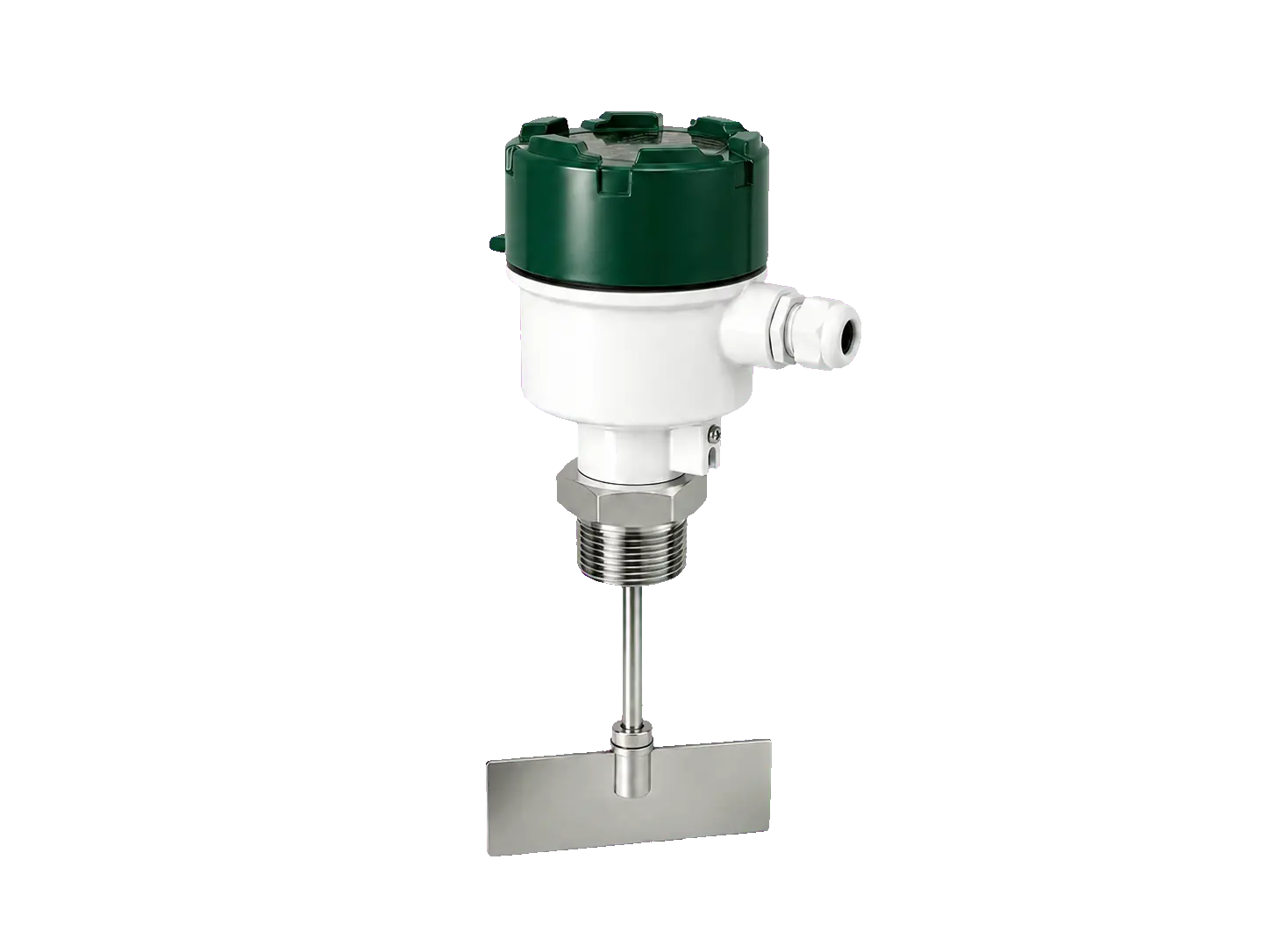
Industrial level switches for high- or low-level detection in liquid tanks, process vessels, silos and hoppers. Choose a vibrating tuning fork for compatible liquids and selected solids, or a rotary paddle for powders and bulk materials.
Rotary Paddle Level Switches are designed for reliable high- and low-level detection of powders, granules and bulk solids in silos, hoppers, bins and process vessels.
Motor-driven paddle for reliable high / low level detection
Kuncham Controls level switches provide point-level detection for tanks, vessels, bins, hoppers and silos. The range combines vibrating tuning fork switches for compatible liquids and selected solids with motor-driven rotary paddle switches for powders, granules and other bulk materials.
Select the sensing principle according to the material and vessel duty. Tuning fork models detect material at the probe using a change in vibration; rotary paddle models detect bulk solids when material restrains the rotating paddle. Standard, extended-length and flanged configurations are available according to product family.
How it works
Working Principle
A level switch detects when material reaches a selected point in a vessel and changes its electrical output for an alarm, interlock or control action.
01
Select the sensing method
Use a vibrating fork for compatible liquids and selected solids, or a rotary paddle for powders and granular bulk material.
02
Material reaches the set point
Material changes the fork vibration or restricts the paddle rotation at the installed switching level.
03
Switching output changes
The instrument changes its relay state to signal a high- or low-level condition to the connected control system.
At a glance
Key Highlights
Two sensing principles for liquid and bulk-solid point-level duties
High- or low-level alarm and interlock applications
Tuning fork option with selectable Hi / Lo fail-safe and sensitivity
Rotary paddle option for powders, granules and free-flowing solids
Probe or fork lengths from 100 mm to 3000 mm, according to model
Standard, flanged and extended configurations available by product family
Range summary
Technical Specifications
Values below summarise the product family. Open an individual product for its complete model and variant data.
Point-level presence / absence at the installed switching point
Suitable Materials
Compatible liquids and selected solids with tuning fork; powders and bulk solids with rotary paddle
Fork Frequency
350–370 Hz on the tuning fork model
Insertion Length
100 mm to 3000 mm, according to model and configuration
Process Temperature
-40°C to 130°C on tuning fork; -20°C to 350°C on rotary paddle, according to configuration
Output
Relay DPDT on tuning fork; 5 A SPDT / DPDT options on rotary paddle
Enclosure
IP67 / flameproof options on tuning fork; die-cast aluminium on rotary paddle
Mounting Connection
1 inch BSP / NPT (M), flanged and customised options by model
Typical use
Applications
Liquid storage and process tanks
Water and effluent level alarms
Chemical process vessels
Grain and food-powder silos
Cement, ash and mineral handling
Plastic granule bins and hoppers
Selection confidence
Why Choose Kuncham Controls?
Choose by material
Compare a vibrating fork for compatible liquids and selected solids with a rotary paddle for powders and bulk materials.
Clear point-level signals
Both product families provide switching outputs for high- or low-level alarms and process interlocks.
Flexible installation
Standard, flanged and extended-length options support different vessel connections and sensing depths.
Application-based selection
Kuncham can help match the sensing method, material, temperature, insertion length, connection and enclosure to the duty.
Support
Questions & Answers
Which level switch should I choose for a liquid tank?
A tuning fork level switch is the listed option for compatible liquids. Confirm the liquid properties, temperature, connection and required switching point before selection.
Which level switch is suitable for powders or granules?
A rotary paddle level switch is intended for powders, granules and bulk solids in bins, hoppers and silos. A tuning fork may also suit selected solids when its application limits are met.
What is the difference between a level switch and a level transmitter?
A level switch changes state when material reaches one selected point. A level transmitter measures level continuously across its configured range.
Can these switches provide high- and low-level alarms?
Yes. The products support point-level switching for high or low alarms and interlocks, subject to the selected model and wiring configuration.
What details are needed to select a level switch?
Share the material, vessel type, switching point, process temperature, insertion length, mounting connection, enclosure and required output or fail-safe action.